SK HYNIX AI MEMORY: WHAT THE NASDAQ LISTING MEANS FOR INFRASTRUCTURE BUYERS
SK hynix AI memory has become one of the most important topics in the global AI infrastructure supply chain. With the company completing a major Nasdaq ADR listing, the market is paying closer attention to the role of advanced memory in AI servers, data centers, and next-generation computing platforms.
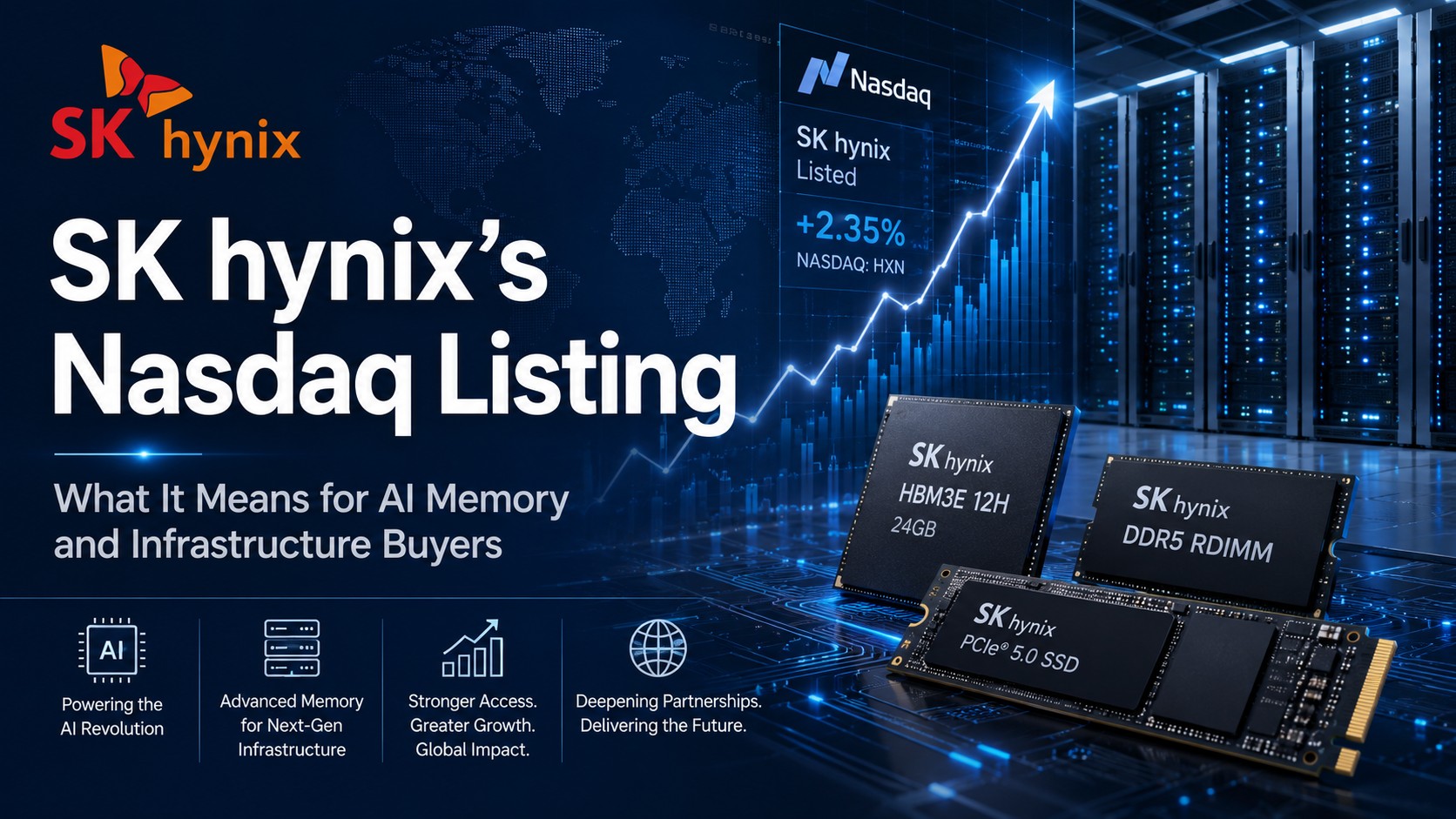
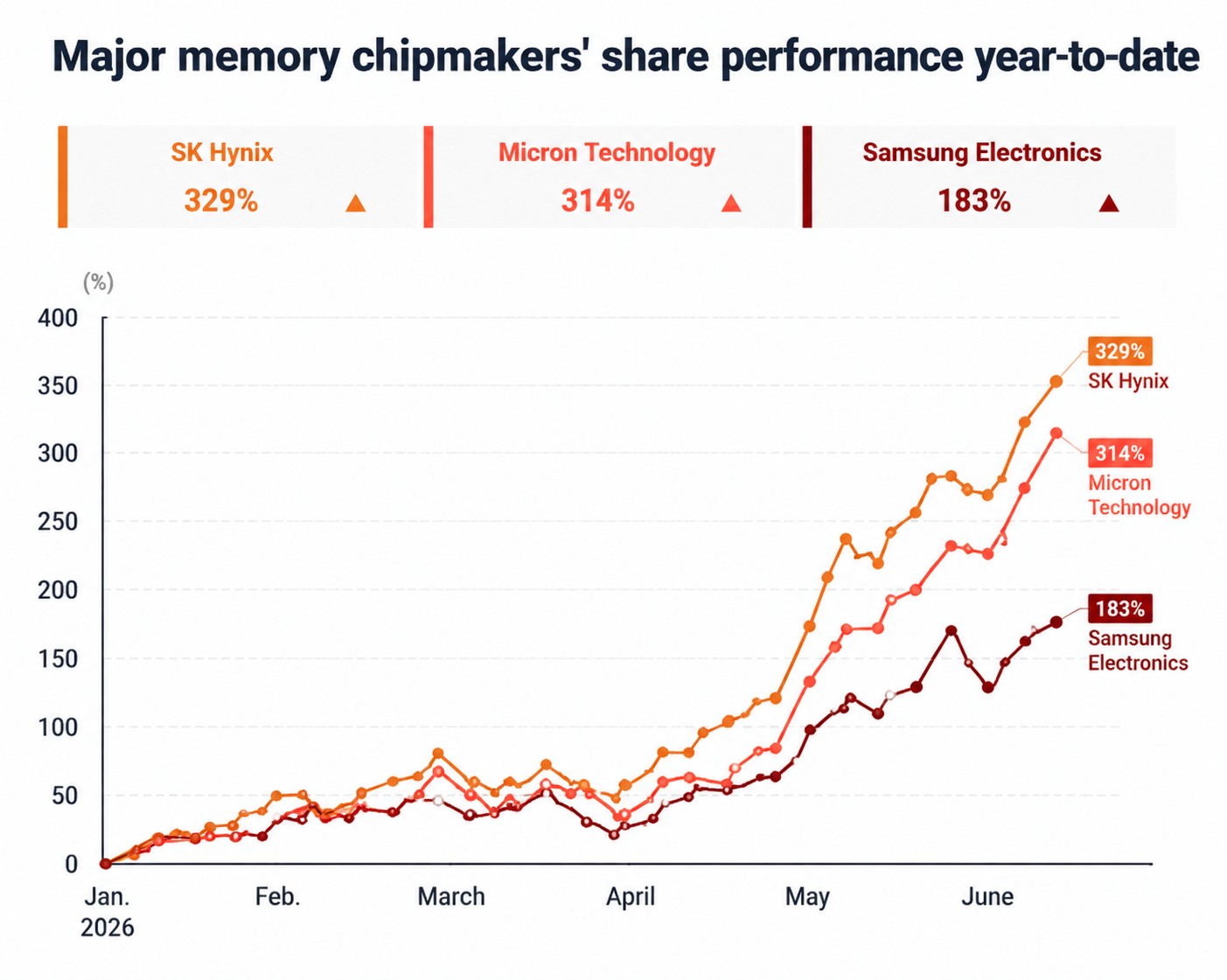
According to the Nasdaq official listing notice, SK hynix ADRs began trading on Nasdaq on July 10, 2026, on a when-issued basis, with regular-way trading expected to begin under the ticker SKHY on July 13, 2026. A Reuters report on SK hynix ADR pricing said the offering drew strong demand, with subscription levels reportedly more than seven times covered. For AI infrastructure buyers, this level of demand reinforces market confidence in the AI memory supply chain.
This listing should not be misunderstood as SK hynix suddenly entering the U.S. market. SK hynix has already been a major global memory supplier for years. The more accurate interpretation is that the company is expanding its international financing channels and improving access for U.S. investors who want direct exposure to the AI memory supply chain.
For infrastructure buyers, the most important question is not only what this listing means for investors. The more practical question is what it means for AI servers, server memory, enterprise SSDs, HBM supply, manufacturing capacity, and long-term data center hardware procurement.
WHY SK HYNIX AI MEMORY IS ATTRACTING GLOBAL ATTENTION
SK hynix AI memory is attracting attention because AI infrastructure is increasingly limited by memory performance, not only by GPU compute power. Modern AI workloads require high-bandwidth memory, large memory capacity, fast storage access, and stable system-level integration.
As AI models become larger and more complex, the demand for memory bandwidth continues to grow. GPUs need fast access to data, and AI servers need memory systems that can support training, inference, and high-density workloads without becoming a bottleneck.
This is why SK hynix’s position in advanced memory matters. The company is closely associated with high-bandwidth memory used in AI accelerators, while also participating in broader memory and storage markets that support enterprise data centers.
The strong demand described in the Reuters ADR pricing report also shows that global investors are not only looking at AI software or GPU vendors. They are also looking at the deeper infrastructure layer behind AI growth: memory, storage, manufacturing capacity, and supply chain stability.
THE NASDAQ LISTING IS ABOUT FINANCING ACCESS, NOT A NEW MARKET ENTRY
该 SK hynix AI memory story should be explained carefully. This Nasdaq listing does not mean that SK hynix is newly entering the U.S. market. It is not a simple “U.S. expansion” story in the sales sense.
Instead, the ADR listing gives SK hynix a broader international capital market channel. It also gives U.S. investors a more direct way to participate in the AI memory theme through a Nasdaq-listed security.
This distinction matters because many basic news articles may describe the event as a simple listing story. For infrastructure buyers, the deeper meaning is different. A stronger financing channel can help support long-term manufacturing investment, which may affect future supply conditions for AI-related memory and semiconductor components.
CAPACITY EXPANSION AND EQUIPMENT INVESTMENT MATTER FOR AI INFRASTRUCTURE
According to the Reuters report on planned use of proceeds, proceeds from the offering are expected to support manufacturing capacity expansion and advanced semiconductor equipment investment, including facilities and chipmaking tools. For AI infrastructure buyers, this is one of the most important parts of the story.
AI memory demand is not only about current product availability. It is also about whether suppliers can keep up with future demand from cloud providers, AI data centers, server manufacturers, and system integrators.
If more capital is directed toward fabrication capacity, advanced packaging, and equipment investment, it may help strengthen future supply for high-performance memory products. This could become important as AI clusters continue to scale and more enterprises begin building private AI infrastructure.
However, buyers should not expect immediate supply relief from a listing alone. Semiconductor capacity expansion takes time. New fabs, packaging lines, and equipment deployment require long planning cycles. The near-term market may still face allocation pressure, long lead times, and price volatility for high-demand AI-related components.
WHAT THIS MEANS FOR AI SERVER BUYERS
SK hynix AI memory demand is closely connected to AI server growth. A high-performance AI server is not built around GPUs alone. It also depends on server memory, high-speed storage, advanced networking, cooling systems, power design, and tested system compatibility.
For AI server buyers, the key lesson is that memory planning should be part of the infrastructure design process from the beginning. Buyers need to consider capacity, bandwidth, generation, compatibility, thermal behavior, and long-term availability.
As AI workloads scale, memory bottlenecks can directly reduce system efficiency. Even if a server uses high-end GPUs, poor memory or storage configuration can limit real-world performance. This is especially important for training clusters, inference platforms, high-performance computing systems, and large enterprise AI deployments.
IMPACT ON SERVER MEMORY, SSD, AND STORAGE PROCUREMENT
该 SK hynix AI memory listing also reflects a wider procurement trend. AI infrastructure buyers are no longer sourcing components independently without considering system-level balance.
Server memory affects workload stability and capacity. Enterprise SSDs affect data loading, checkpointing, dataset movement, and inference storage architecture. High-speed networking affects communication between servers and GPUs. These components must be selected as part of one complete infrastructure plan.
For buyers of server memory, enterprise SSDs, GPUs, and network interface cards, this means procurement decisions should focus on verified compatibility and project-level supply reliability, not only on the lowest unit price.
As AI infrastructure demand grows, buyers may need to plan earlier, secure supply channels, and work with suppliers that understand both component sourcing and AI server deployment requirements.
INDUSTRY OUTLOOK: AI MEMORY WILL REMAIN A STRATEGIC COMPONENT
SK hynix AI memory will likely remain a strategic part of the AI infrastructure market. The industry is moving toward larger AI clusters, higher GPU density, more complex models, and stronger demand for fast data movement.
This means memory and storage suppliers will play a more important role in the AI hardware ecosystem. In the past, buyers often focused mainly on GPU availability. In the next stage, buyers will also need to track memory supply, HBM development, SSD performance, packaging capacity, and platform compatibility.
The Nasdaq ADR listing may also increase global visibility for the AI memory supply chain. More attention from international investors can reinforce the importance of memory suppliers in the broader AI infrastructure cycle.
For infrastructure buyers, this is a signal to build a more complete procurement strategy. AI infrastructure planning should include GPUs, memory, SSDs, NICs, CPUs, servers, cooling, power, and supply chain timing.
CUBECORE INSIGHT
At CubeCore Technology Limited, we see the SK hynix AI memory Nasdaq listing as part of a larger shift in AI infrastructure. The market is moving from single-component purchasing toward complete system-level planning.
AI infrastructure buyers need reliable sourcing, tested hardware, stable supply channels, and flexible support for project-based procurement. This applies not only to GPUs, but also to server memory, enterprise SSDs, CPUs, network interface cards, and complete server hardware solutions.
CubeCore supports system integrators, cloud providers, data center operators, and enterprise clients with server and data center hardware sourcing. Our product scope includes GPUs, network interface cards, enterprise SSDs, server memory, CPUs, and server hardware solutions for AI and data center projects.
As AI workloads continue to expand, the importance of memory will only increase. Buyers who understand this shift early will be better prepared to manage supply risk, system compatibility, and long-term infrastructure performance.
CONCLUSION
SK hynix AI memory is now more visible to global markets after the company’s Nasdaq ADR listing. But the most important meaning for infrastructure buyers is not the listing itself. The deeper signal is that AI memory, manufacturing capacity, and supply chain reliability are becoming central to the future of AI infrastructure.
This is not simply a financial market event. It is part of the broader AI hardware cycle. For buyers building AI servers, data centers, and infrastructure platforms, memory strategy will become increasingly important alongside GPUs, networking, storage, cooling, and power planning.
As AI infrastructure grows, companies that plan component sourcing earlier and evaluate hardware at the system level will be better positioned to build scalable, efficient, and future-ready AI platforms.