NVIDIA AI FACTORY STRATEGY: WHAT IT MEANS FOR INFRASTRUCTURE BUYERS
NVIDIA AI factory strategy is becoming one of the most important signals in the global AI infrastructure market. NVIDIA is no longer positioning itself only as a chip supplier. Instead, the company is building a broader full-stack infrastructure model that covers GPUs, CPUs, networking, software, simulation, data center design, power, cooling, and AI factory operations.
For infrastructure buyers, this shift matters. AI infrastructure purchasing is no longer just about choosing the latest GPU. It is becoming a system-level decision that requires careful planning across compute, memory, storage, networking, facilities, and long-term supply chains.
According to the NVIDIA official announcement, NVIDIA DSX is designed to give infrastructure builders a complete playbook for creating AI factories. NVIDIA describes DSX as a platform that brings together software libraries, APIs, reference designs, accelerated computing platforms, and partner technologies for AI factory design, deployment, and operations.
WHY NVIDIA AI FACTORY STRATEGY MATTERS
NVIDIA AI factory strategy matters because artificial intelligence is changing the role of the data center. Traditional data centers mainly store, process, and deliver information. AI factories are designed to produce intelligence at scale by continuously training, tuning, and running AI models.
This means infrastructure buyers must look beyond single-component performance. GPU performance is still critical, but it is only one part of the total system. A modern AI factory also depends on high-bandwidth memory, high-speed networking, enterprise storage, advanced cooling, reliable power delivery, and software that can manage large-scale AI workloads efficiently.
NVIDIA’s AI factory direction shows that AI infrastructure is moving toward integrated architecture. Buyers who only compare GPU specifications may miss important factors such as networking bandwidth, rack-level power requirements, thermal limits, cluster scalability, and lifecycle support.
NVIDIA IS MOVING FROM CHIPS TO FULL-STACK AI INFRASTRUCTURE
The key message behind NVIDIA AI factory strategy is clear: NVIDIA wants to provide more than chips. The company is building an ecosystem that supports the full AI infrastructure stack.
This includes accelerated computing platforms such as Blackwell and Vera Rubin, high-speed networking technologies such as Spectrum-X, infrastructure acceleration through BlueField, AI software platforms, and digital twin tools for simulating data center design and operations.
NVIDIA’s Enterprise AI Factory validated design also shows this full-stack direction. The validated design combines accelerated computing, infrastructure acceleration, networking, and NVIDIA AI Enterprise software to help enterprises build scalable and predictable AI infrastructure.
For buyers, this means NVIDIA-based AI infrastructure may increasingly be evaluated as a complete system instead of a collection of individual parts. The buying decision becomes less about “which GPU card should we buy” and more about “which infrastructure architecture can support our AI workload, budget, power capacity, and growth plan.”
WHAT AI FACTORIES CHANGE FOR INFRASTRUCTURE BUYERS
NVIDIA AI factory strategy changes how infrastructure buyers should evaluate server hardware. In the past, many buyers focused mainly on GPU model, memory capacity, and price. In the AI factory era, that is not enough.
Infrastructure buyers need to evaluate whether the server platform can support the required GPU density, power draw, cooling method, interconnect bandwidth, memory configuration, and storage throughput. They also need to consider whether the system can scale from a few servers to full racks or larger AI clusters.
Networking becomes especially important. Large AI workloads require fast communication between GPUs and servers. If the network fabric is weak, expensive GPUs may remain underutilized. For AI training clusters and large inference platforms, high-speed networking cards, switches, and optimized network architecture can directly affect performance and cost efficiency.
Memory and storage also become more important. AI workloads require high memory bandwidth and fast data access. Enterprise SSDs, server memory, and storage architecture must be selected according to workload requirements, not only based on capacity or price.
POWER, COOLING, AND RACK DESIGN ARE NOW STRATEGIC FACTORS
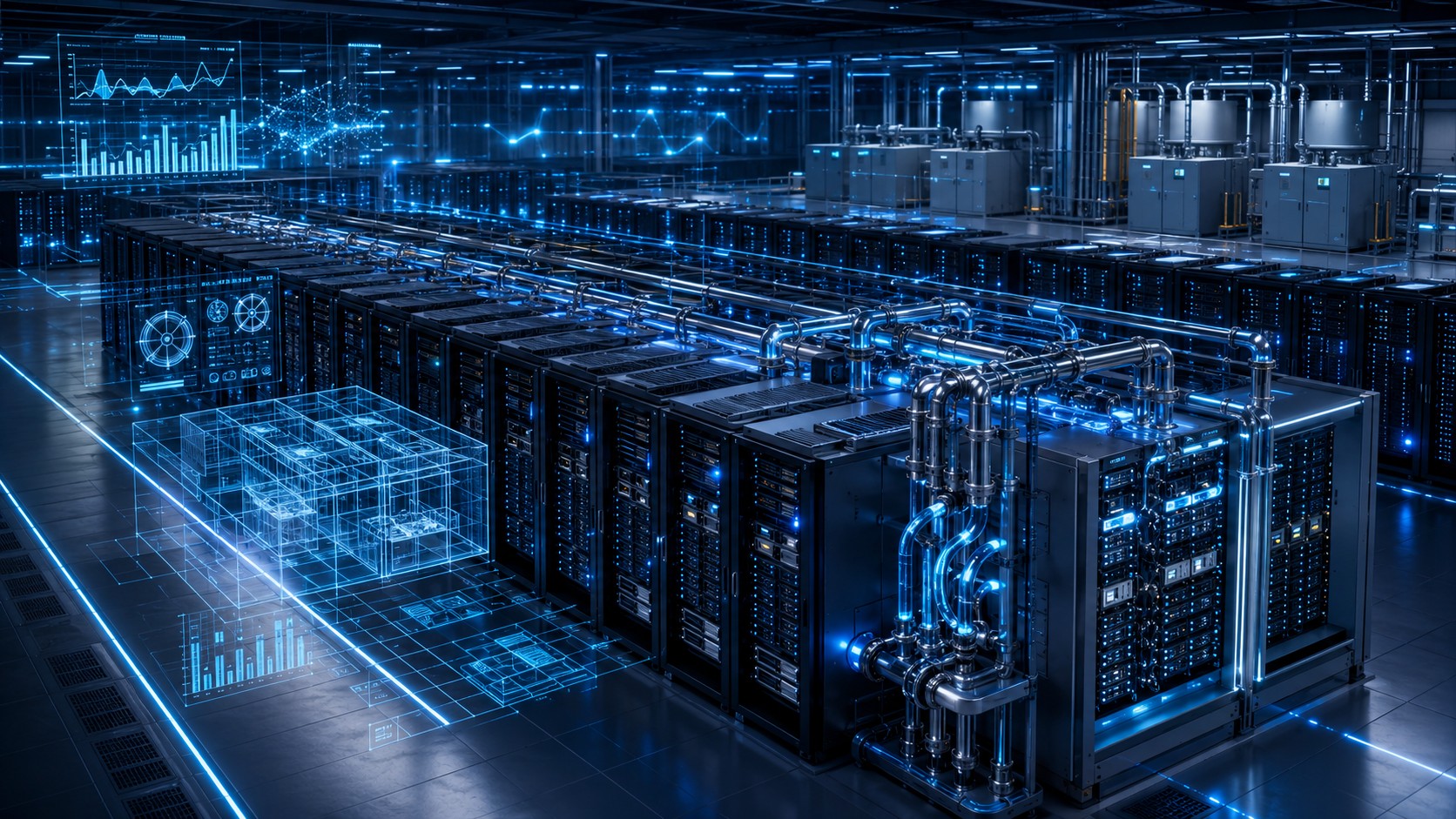
One of the biggest changes in AI infrastructure is the rising importance of power and cooling. High-performance GPU servers consume significantly more power than traditional enterprise servers. As rack density increases, air cooling may no longer be enough for certain deployments.
This is why AI factory planning must include power distribution, rack layout, cooling method, airflow design, and facility readiness. A buyer may be able to source GPUs, servers, and networking hardware, but the project can still fail if the data center cannot support the required power and thermal load.
NVIDIA DSX also reflects this direction by treating compute, cooling, power, and operations as part of one integrated AI factory system. This is important because future AI infrastructure projects will need to be planned at the rack, cluster, and facility level.
SUPPLY CHAIN IMPACT FOR GPU SERVERS AND DATA CENTER HARDWARE
NVIDIA AI factory strategy also affects the server hardware supply chain. As AI platforms become more integrated, compatibility and availability become more important. Buyers need to make sure that GPUs, CPUs, memory, SSDs, NICs, cables, servers, and cooling components can work together reliably.
For project-based procurement, this creates new challenges. Buyers may face long lead times, changing platform roadmaps, limited availability of high-demand components, and compatibility risks between different server generations.
This is why infrastructure buyers should work with suppliers that understand complete server hardware sourcing, not only individual GPU trading. Verified hardware, tested components, accurate configuration, and fast delivery are becoming key requirements for AI infrastructure projects.
CUBECORE INSIGHT
At CubeCore Technology Limited, we see NVIDIA AI factory strategy as a major shift for AI infrastructure buyers. The market is moving from single-product procurement toward complete infrastructure planning.
CubeCore supports global customers with server and data center hardware solutions, including GPUs, network interface cards, enterprise SSDs, server memory, CPUs, and complete server hardware sourcing.
For system integrators, cloud providers, data center operators, and enterprise IT teams, the key question is no longer only which GPU to buy. The more important question is how to build a stable, scalable, and cost-effective AI infrastructure platform.
As AI factories become the new model for large-scale AI deployment, buyers need reliable sourcing, tested hardware, flexible supply chains, and a clear understanding of system-level compatibility.
CONCLUSION
NVIDIA AI factory strategy shows that the AI infrastructure market is entering a new stage. NVIDIA is no longer just selling chips. It is building a full-stack model for designing, deploying, and operating AI factories.
For infrastructure buyers, this means purchasing decisions must become more strategic. GPUs remain essential, but networking, memory, storage, power, cooling, software, and supply chain reliability are now equally important.
The companies that understand this shift early will be better prepared to build efficient, scalable, and future-ready AI infrastructure.